Model
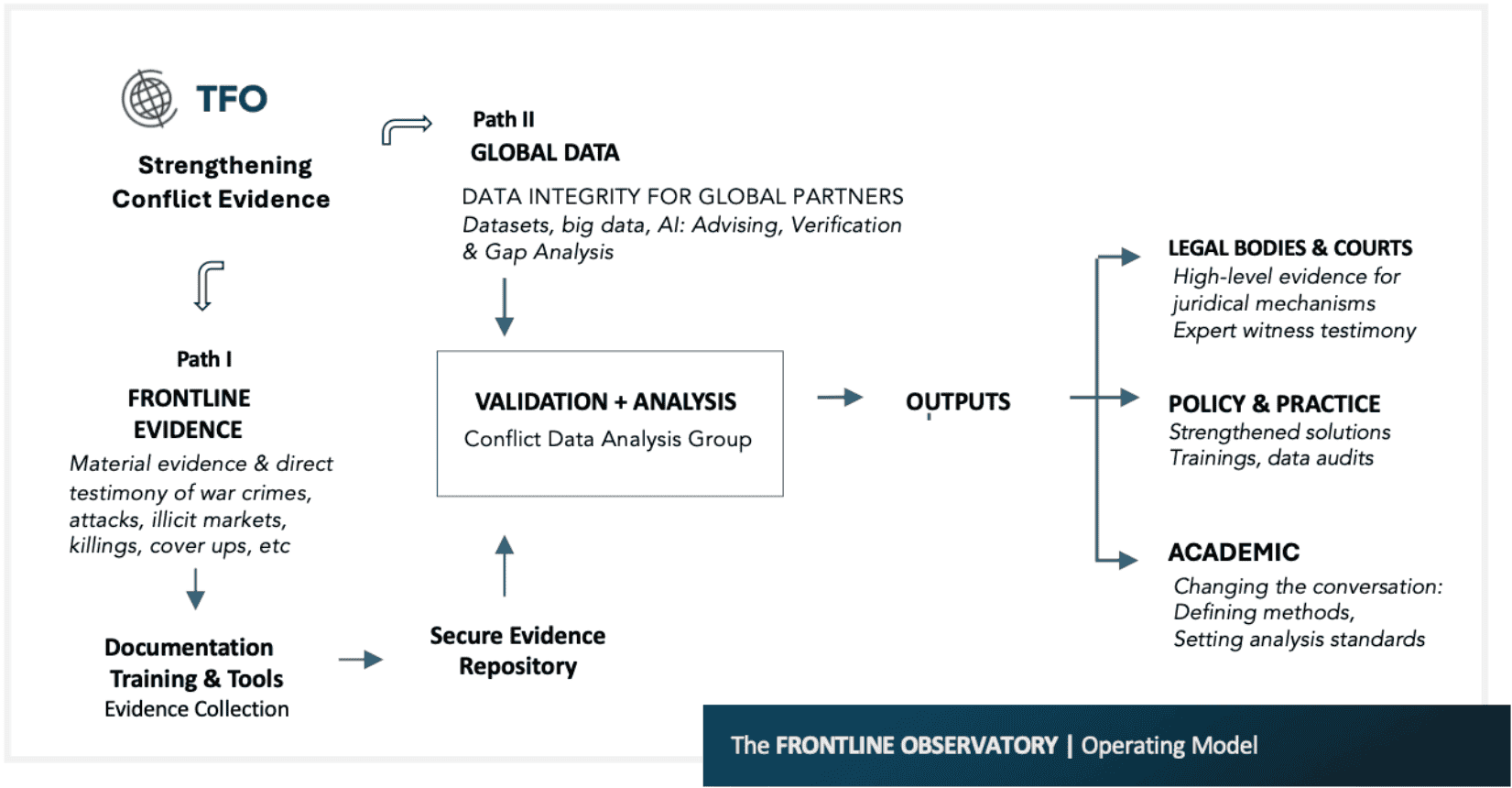
We collaborate with communities in conflict zones and global partners to bridge this evidence gap from both ends. At the ground level, we partner with those closest to violence to strengthen evidence collection at the source. On the global scale, we deliver improved validation and analysis tools for policy, practice, and research that advance accountability to the lived realities of war.
From the Ground Up | Strengthening Frontline Evidence of Conflict
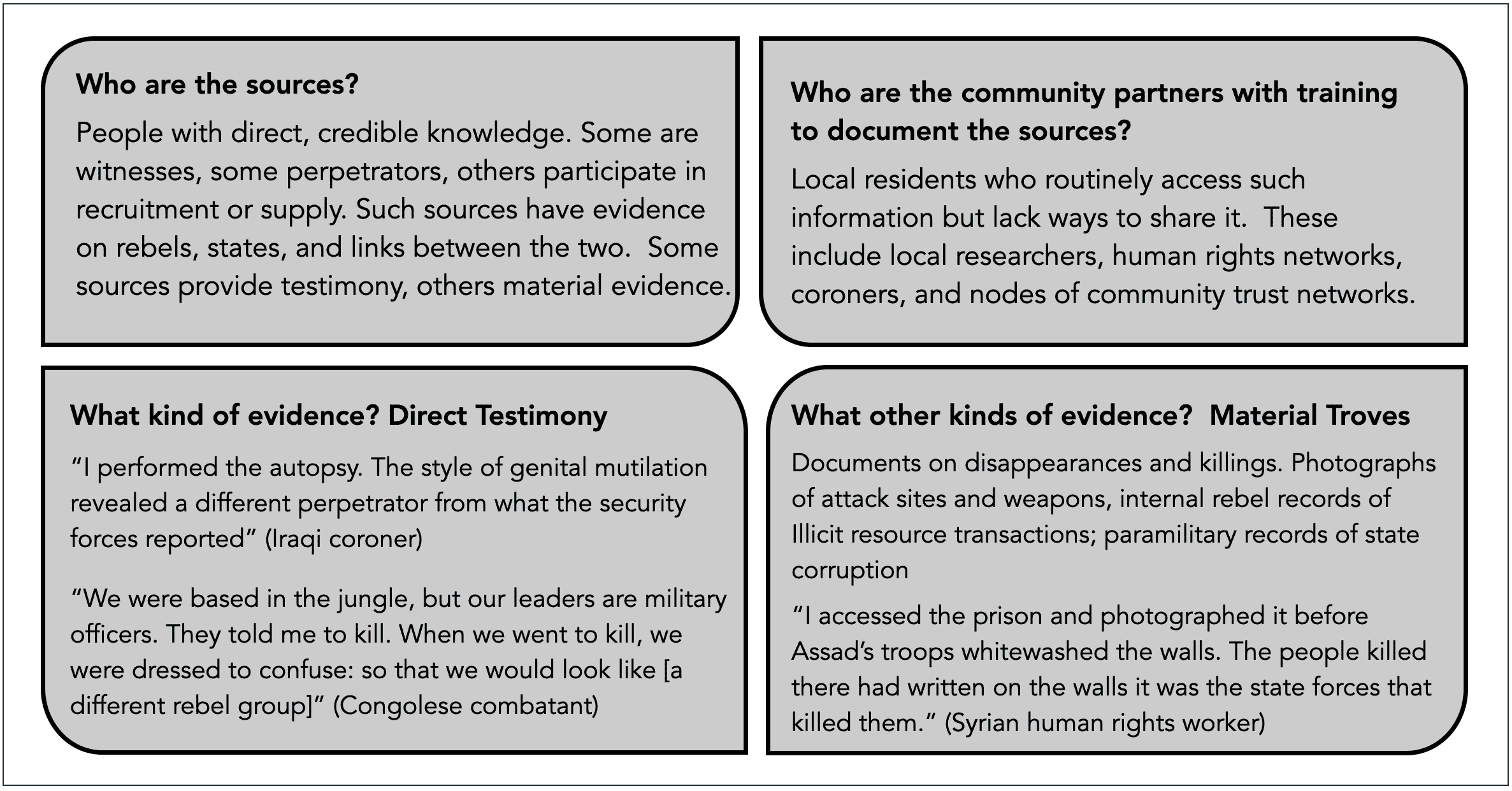
Civilian and participants in conflict zones often warn that what they see defies official and international accounts. Yet without documenting direct knowledge, the evidence vanishes.
We flip the script on violence by placing rigorous validation tools in the hands of those most affected. Through training from international criminal investigators and ongoing mentorship, The Frontline Observatory equips local partners to produce gold-standard, field-based documentation and creates secure, ethical pathways to link high-quality evidence to global audiences. Our contextually-tailored approach enables documentation in local languages, via trusted networks, and through channels civilians deem safe, allowing them to convert direct observations into systematic evidence about war.
Documentation Training
Collaborations with international investigators offer state-of-the-art techniques of documenting war crimes, crimes against humanity, genocide, and illicit markets to evidentiary standards able to hold up in court, inform decision-makers and set global research agendas. Training areas include:
Evidence recognition
Documentation techniques
Chain of custody
Verification checks
Trauma-informed interviewing
Safety around remnants of war
Photographing scenes of attacks
Secure evidence handling and transmission
Secure Evidence Repository
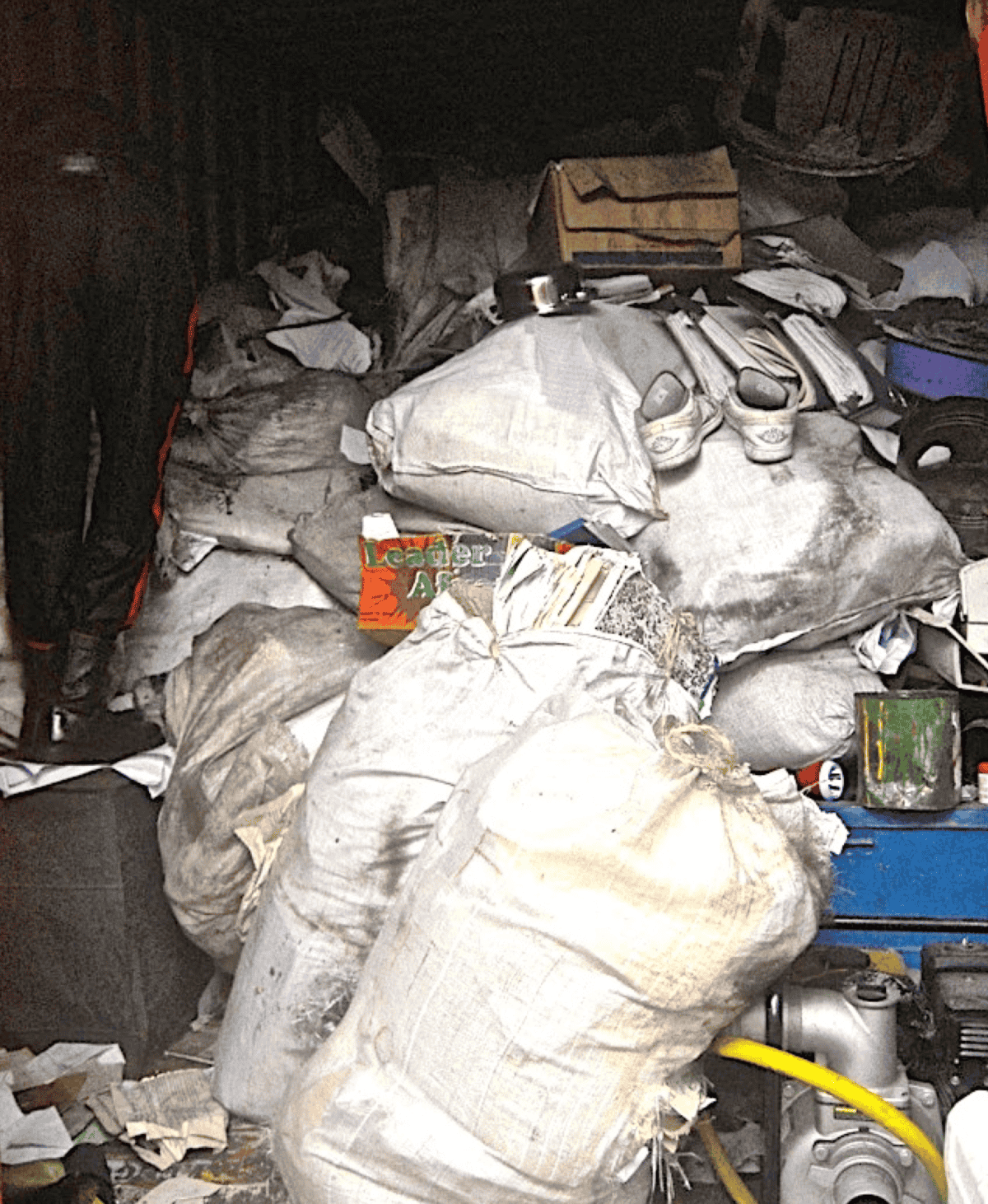
Collected evidence is transmitted to a secure digital archive.
Supports security for those most at risk while preserving high-quality records and enabling counter-verification, cross-referencing, and chain of custody verification.
Security for those at risk
Enables those in conflict to transmit evidence without storing it on site; anonymization and encryption tools
Preservation
Preserves high-quality records to prevent losses from war (bombings, raids) or memory
Verification
Enables counter-verification, cross-referencing, and chain of custody verification
Transparent Verification & Analysis
The Observatory authenticates and systematizes records of conflict, trafficking, and atrocity.
Clear verification metrics carefully evaluate each source along published criteria (proximity to the event, motivation to share, setting). Strict corroboration protocols then triangulate across high-quality sources to reconstruct events.
Global Outputs
High-quality sources appropriately redacted for confidentiality and security. Incident reports with step-by-step verification and corroboration procedures.
Access to High-Quality Sources
Incident Reports
Strategic Profiles
Methodological Clarity
At the Global Scale | Data Integrity Tools for the Realities of War
At the international scale, the Frontline Observatory advances accountability through rigorous evidence and validation tools that strengthen the global standard of conflict data. The Conflict Data Analysis Group designs integrity-based data tools that account for the realities of coercion, secrecy, and opportunism that shape available knowledge about conflict.
Research | Integrating Strategy with Data
We seek understanding the origins of the data that tell the stories that drive our world.
- Substantive gaps: death counts, illicit markets
- Tactics that produce the gaps: how coercion and secrecy shape typical data streams
- Implications: Effects of data distortions on theoretical conclusions, policy, and practice
- Field collaborations into dynamics revealed through on-the-ground collection
Innovation | Methodological Tools for a Changing World
- Systematic tools to detect and correct for bias in available conflict data
- Verification tools and protocols to leverage high vs low-credibility sources effectively
- Aligning technological tools to reflect real-world practices
- Models of the data ecosystem to untangle politics of (in)visibility
- Counter-disinformation tools
Research & Innovation products include: academic publications on strategies and tactics; policy briefs, statistical packages
Partnerships | Equipping Global Partners
The Conflict Data Analysis Group at the Frontline Observatory works with global partners to design integrity-based data systems. Deliverables include:
- Data audits and gap analysis of partner information streams
- Verified evidence dossiers
- Supporting effective work in conflict zones
- Research partnerships: in select cases, if research aligns with civilian priorities
- Training courses on verification, data, and evidence to sort low- from high-quality sources and analyzing the strategy behind information production
Research & Innovation products include: academic publications on strategies and tactics; policy briefs, statistical packages